Categories
Asia Noise News

Making noise about keeping the decibels down in Japan

SPECIAL TO THE JAPAN TIMES
OCT 10, 2014, DANIEL KRIEGER

Yoshimichi Nakajima was waiting for the train one day at his local station in Tokyo when he politely asked the station attendant to lower the volume on his microphone. He was told that would be “difficult,” so Nakajima lent a hand by grabbing the mic and throwing it onto the track. He then recounted all of this to the station master, who was speechless. Nakajima, a rare breed of Japanese anti-noise crusader, has also taken a speaker from a liquor store and tossed it outside as well as seized a megaphone from a police officer.

“I’ve done such things on numerous occasions,” he said recently in an email. “And I never once regretted doing them.”

For a culture that places a high value on quiet, Japan can get pretty noisy sometimes, whether it’s the loud and long-winded announcements on trains and buses, the big cacophonous TV screens around shopping centers, the right-wing nationalists’ trucks that drive around blaring marching music and imperialist slogans out of loudspeakers or the infamous election campaigners who likewise promote themselves at ear-splitting volumes.

Though there are laws that limit most amplified sounds in public spaces, they typically aren’t enforced. Campaign trucks are even exempt from the laws, so in 2007 Yu Ito, then a member of the Metropolitan Assembly, set up the No! Senkyo Car network, whose anti-noise logo conveys that message.

When it comes to making noise in public, free speech trumps the right to privacy, a state of affairs that has driven Nakajima to distraction ever since he returned to Japan from Europe several decades ago and realized how noisy his native country is.

Nakajima, 68, is a philosopher and author of a series of books about noise in Japan, including his “Japanese are Half Fallen” (2005), where he provides an account of Japan’s irksome “culture of noise” that includes unnecessary announcements in train stations, the endless loops played in stores, talking escalators and ATMs, and the use of cranked-up loudspeakers just about everywhere. In addition to being a profound annoyance, he argued that such relentless noise desensitizes and even infantilizes people, rendering them docile. But despite his bold acts of protest, he acknowledged that ultimately nothing can be done because “most Japanese people don’t see ‘noise’ as a problem, and a large percentage of them actually want this ‘noise.’ “

Daniel Dolan, a professor of business communications at Waseda University, discovered this when he was writing a paper about the issue titled: “Cultural Noise: Amplified Sound, Freedom of Expression and Privacy Rights in Japan,” published in the International Journal of Communication in 2008.

Dolan, 54, who moved to Japan 20 years ago from Seattle, found that his Japanese wife and acquaintances couldn’t fathom the fuss when he broached the subject and expressed his dismay. Talking to Westerners, however, he encountered understanding, which jibed with a study cited in his paper that found Japanese are far more tolerant of environmental noises than Americans (and less likely to complain about them).

Nevertheless, Japan does have legally binding sound ordinances, much like those of the United States. To prove that these laws were being broken, Dolan took decibel readings with a sound meter where announcements were publicly broadcast and confirmed that they often exceeded the 70-decibel limit. But when he brought the evidence to officials at the local city office and asked why these infractions were permitted, they shrugged and explained that they were understaffed and just had to let it go.

From his research, which focused only on amplified sounds that can’t be avoided, such as those heard outside of stores or in the streets, rather than in places people choose to frequent, such as a pachinko parlor or train, he concluded that there’s one simple way to lower the volume of the soundscape.

“Sound management reform would consist of enforcing laws that are already there,” he said, “not necessarily creating new ones.” But despite the fact that such noise can raise stress levels and cause discomfort, to some at least, he has abandoned this line of inquiry. His paper didn’t lead to any discussion of the matter, and continuing to harp on about it would only alienate people anyway.

“It’s got to be something that Japanese people care about and push to change,” he said. “And I haven’t felt that at all.”

Chris Deegan, an anti-noise activist who hasn’t yet given up the fight, agreed that reform must come from within. Deegan, a 70-year-old translator from London who has lived in Tokyo for over four decades, was once all set to leave Japan because of this very issue. But then, by chance, he heard about an all-Japanese anti-noise group, Shizuka na Machi wo Kangaeru Kai — The Group that Thinks about a Quiet Town — and buoyed by a new sense of solidarity, decided to stay. After the founder quit out of despair, Deegan became the director of the group, which he said has about 60 members nationwide, who are “striving to make Japan just a little quieter.”

He is in charge of the group’s annual publication, Amenity, and organizes get-togethers among members, most of whom are Japanese who have spent some time in the West. Considering the Sisyphean struggle they are up against, they are utterly willing to compromise and have to settle for tiny victories. He and a few members once gently asked an agent at Tachikawa station to turn down the volume or increase the interval of a no-smoking announcement loop they found intrusive. To their surprise, he shut it off. However, six months later it was back on because, the agent said, lots of people had asked why that announcement was no longer broadcast.

“The problem was ordinary people,” Deegan said. “They don’t seem to be affected by it.” Group members also send letters to railway companies and local municipalities and write about their experiences for Amenity, whose latest issue is out this month. For him, the greatest sonic nuisance comes from the emergency PA systems in smaller locales that play melodies and regular announcements that can mercilessly go on and on.

“Ultimately, if we could get Japan down to the level of a Western European country, that would be fantastic,” he said. “But for the time being, if we can just drop the noise any small degree at all, we’ll be happy.”


Categories
Asia Noise News

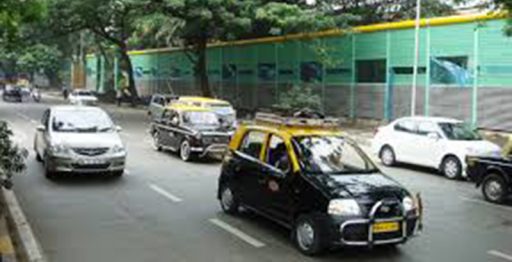
India, Fancy horns deafen city, noise levels high

Thane: TOI had recently reported that nearly 38 per cent traffic cops manning the streets have induced hearing loss due to their jobs. Noise pollution is one of the main reasons causing hearing hazards. Statistics received from the traffic department reveals that the city traffic cops have penalized nearly 201 offenders for using pressure or multi-tone horns in 2013. The number has doubled in the last two years. “Earlier, four wheelers and truck drivers used to install and apply pressure or multi-tone horns in their vehicles. But trend seems to be changing. Now even motorists seem to be using these fancy horns, which only adds to the noise pollution,” a police official attached to the Thane traffic police department stated.

According to the provisions of noise pollution (regulation and control rules), use of pressure horn is restricted and is also a violation of the Motor Vehicles Act (MVA). Erring drivers and motorist are fined Rs 100 for violating these norms.

DCP Thane (Traffic) Dr Shirkant Paropkari said number of people fined for using pressure horn has doubled in past two years. “Policemen are taking efforts to penalize the offenders, but more than regulation, social awareness will help in curbing the rising noise pollution. Horns are one of the main reasons for noise pollution. If citizens become more responsible and pledge not to make use of horn unless required, then noise pollution can be reduced,” Paropkari said.

Joint commissioner of police (Thane) V V Laxkshminarayana said, “We had organized workshops for schoolchildren to make them understand the reasons and effects of noise pollution. The idea is not only to educate kids, but ensure that they go home and ask their parents not use to horns unnecessarily.”

Meanwhile, a senior traffic cop stated that fine of negligible amount and no strict punishment leads to noise pollution. “Fine should be Rs 1,000 so that it act as deterrent,” the official said.

Categories
Asia Noise News

Philippines, In Cebu City: Owners of loud vehicles face bigger fine, jail time

CEBU, Philippines – Owners of motor vehicles in Cebu City whose mufflers are modified to emit louder sounds may face higher fines, if not imprisonment.

The City Council has passed an ordinance that puts more teeth to a 1964 ordinance that requires the use of a “silencer” for all motor vehicles to avoid “loud and deafening blasts”.

Under the new ordinance authored by Councilor Roberto Cabarrubias, violators may be fined P3,000 for the first offense and P5,000 or imprisonment or not more than three months or both at the discretion of the court for the second offense.

“There is a need to make people act responsibly over the use of their property so as not to cause disturbance and annoyance to the public,” Cabarrubias said.

A muffler or a silencer is a device attached to vehicle exhaust pipes to help diminish the loud sound emitted by car engines.

“Those who use or operate any motor vehicle so modified or with removed muffler as to cause loud and unnecessary or unreasonable noise, including the noise resulting from exhaust, which is clearly audible from nearby properties and unreasonably disturbing to the quiet, comfort, or repose of other persons will be penalized,” Cabarrubias said.

Cabarrubias said vehicles are equipped with mufflers or silencers for anti-noise pollution, but there are vehicle owners that remove or modify the mufflers purposely “to make the sound emitted by exhaust pipes louder”.

Section 3(b) of the ordinance also prohibits the use or operation of “any motor vehicle that emits noise higher than 84 decibels even if not modified.”

Exempted from the rule are those driving a vehicle during a race and while the vehicle is on a racetrack, provided that the person has acquired written consent from the Office of the Mayor.

Mayor Michael Rama who supports the measure said the ordinance will help create a more peaceful environment for Cebu City.

“Anything that will already contribute noise is a public and security issue… it will intrude already (to) the right of an individual to have a peaceful living,” Rama said.

City Ordinance 309 (Anti-Noise Ordinance), as amended by City Ordinance Nos. 1313, 1705 and 1898, makes it unlawful for “any person to willfully cause loud and deafening blast of engines…of motor vehicles.”

The prohibition shall take effect from 7 p.m. to 5 a.m. the following day. —/JMO (FREEMAN)

Categories
Asia Noise News

India: Amra Marg may get noise barriers soon

Navi Mumbai: After constant complaints by residents and several failed attempts, the civic body may finally install noise barriers on Amra Marg in Belapur.

The plan, which was conceptualized three years ago, failed to take off after companies, which bid to install these barriers, quoted prices exceeding the budgetary allocation.

In 2011-12, Navi Mumbai Municipal Corporation (NMMC) had proposed to install these barriers and had sanctioned Rs 50 lakh. Recently, the civic body revised that allocation to Rs 4 crore.

The NMMC has also sanctioned a study to investigate the various kinds of sound and ways to insulate the surrounding buildings from it.

“Since the area is flanked by a hill on the east and high-rise buildings on the west, sound reflects like in a valley. Residents have spent lakhs to install double-glass windows to block sounds,” said Tejaswini Pandit, architect and resident of Neel Sidhi Atlantis.

She has been coordinating with the NMMC, who acknowledged her concerns.

“Containers heading to JNPT ply on Amra Marg highway. Since residential complexes have come up on the sides of the highway, the sound is deafening. We have been planning to get noise barriers installed on this route,” said Mohan Dagaonkar, engineer, NMMC.

The study will also give NMMC a rough estimate on the cost for this project. “Requirements of sound barriers for residential areas are different from those installed atop bridges and other open areas. Decibel readings of the area are being recorded,” said Subodh Mule, deputy engineer (environment), NMMC.

After the study is complete, the NMMC will invite tenders from companies to install these barriers.

Categories
Asia Noise News

Fed-Up Chinese Residents Blast Dancing Grannies With $42,000 Sound System

Where verbal abuse, sand and buckets of human waste have failed, a warning message blasted over and over again through a $41,900 speaker system appears to have succeeded.

Aggrieved residents in the coastal Chinese city of Wenzhou declared victory this week after successfully routing packs of public dancers that had been gathering in a nearby park, according to state media reports.

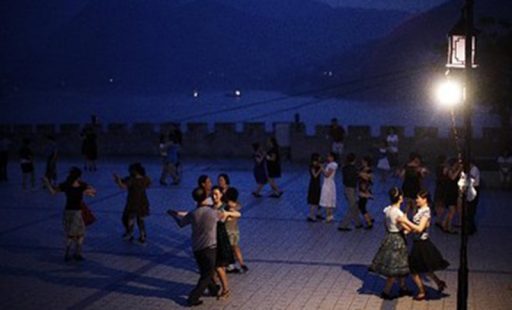
As WSJ detailed last week, dancing in public — a form of exercise that boasts roughly 100 million adherents in China, most of them middle-aged and retired women — has become a flashpoint in the country’s drive to urbanize.

Squeezed by development, China’s happy-footed seniors have been forced to take their dancing to parks, public squares, parking lots and other areas where sound from their portable sound-systems often carry over into the homes of nearby residents.

Some beleaguered residents have decided to fight noise with noise. At Wenzhou’s Xin Guoguang apartment complex this weekend, 600 residents launched a tit-for-tat “counterattack,” pooling 260,000 yuan to buy six professional-quality speakers. According to the Communist Party-run Hangzhou Daily, they set the speakers up on a fourth-floor balcony across from the park and used them to blast an ear-splitting message — “Please respect the noise pollution laws of the People’s Republic of China and immediately cease illegal activities!” — over and over again for hours at a time.

The newspaper quoted residents complaining that hundreds of dancers filled the park from 10 a.m. to 10 p.m., broadcasting music and disturbing their children’s studies. They tried many times asking the dancers to turn down the volume, they said, to no avail.

The head of the local residents committee, a man surnamed Wu, told the Hangzhou Daily that noise from the dancers had also affected the value of apartments in the area. “Everyone knows how loud it is here,” he said.

On Monday, representatives of the local administrative, environmental protection, park management and other bureaus responded to the speaker protest by convening a “noise in public squares” coordinating committee, according to a report posted on the website of the official Xinhua news agency. The committee agreed to set up a working group that would patrol the park. The residents have since dismantled the speaker system.

A day later, district officials said groups would have to register to hold activities in the park. They also said they would display decibel levels on electronic screens in the park to help dancers monitor their own noise levels.

“Some people might think it’s a lot of money to spend, but compared to the invisible losses we’ve suffered, it’s nothing,” Mr. Wu told Hangzhou Daily.

The Wenzhou group isn’t the first to prevail over public dancers by taking extreme measures. In November, a Beijing man successfully chased away a local dancing group by firing a shotgun in the air and unleashing three Tibetan mastiffs. He was later sentenced to six months in jail, but a neighbor of his suggested to China Real Time the sacrifice may have been worth it. “I’m glad they’re gone,” he said.

Elsewhere, though, the battle continues to rage on. In one residential complex in the central city of Wuhan, irritated apartment owners have been unable to deter local dancers despite hurling insults, threats and — in a moment of desperation – feces.

Thailand